
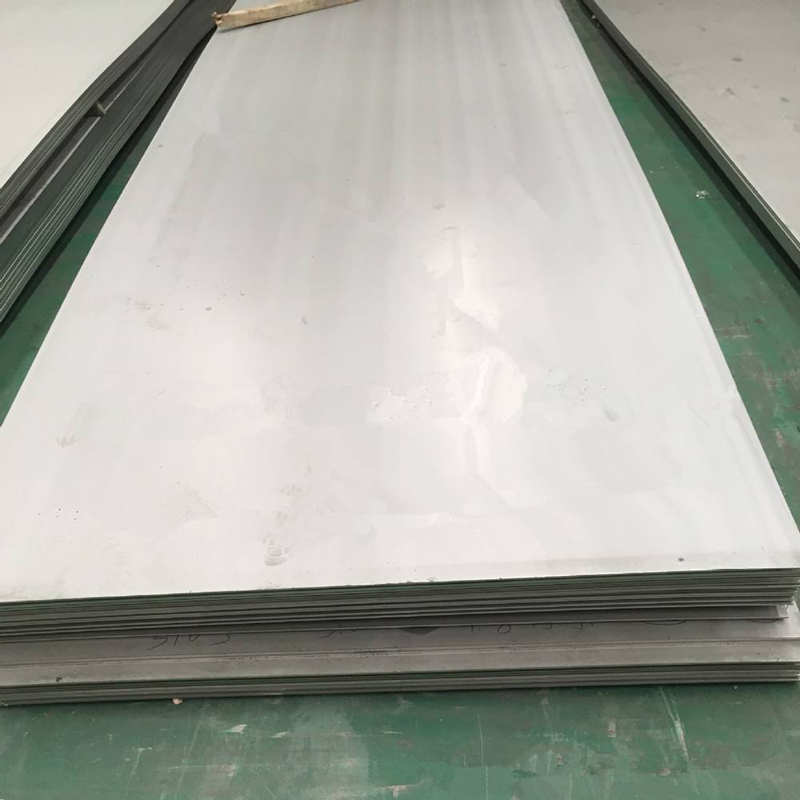


Regardless of whether 430 ss sheet or heat-resistant steel sheet, austenitic steel sheets have the best overall performance. They have sufficient strength, excellent plasticity and low hardness. This is one of the reasons why they are widely used. 430 ss sheet ferritic stainless steel is similar to most other metal materials. Its tensile strength, yield strength and hardness increase with decreasing temperature; plasticity decreases with decreasing temperature. Its tensile strength increases evenly within the temperature range of 15~80°C. More importantly, as the temperature decreases, its impact toughness decreases slowly, and there is no brittle transition temperature. Therefore, stainless steel can maintain sufficient plasticity and toughness at low temperatures.
Heat resistance of 430 ss sheet
Heat resistance refers to the ability to resist oxidation or gas medium corrosion at high temperature, that is, thermal stability, and at the same time, it has sufficient strength, that is, thermal strength at high temperature.
The influence of carbon: Carbon in 430 ss sheet ferrite is an element that strongly forms and stabilizes austenite and expands the austenite zone. The ability of carbon to form austenite is about 30 times that of nickel, and carbon is an interstitial element , Through solid solution strengthening, the strength of austenitic stainless steel can be significantly improved. Carbon can also improve the stress corrosion resistance of austenitic stainless steel in high-concentration chloride (such as 42% MgCl2 boiling solution).
However, in 430 ss sheet ferrite, carbon is often regarded as a harmful element. This is mainly due to the fact that under certain conditions in stainless steel and corrosion-resistant applications (such as welding or heating at 450~850°C), carbon can interact with steel. The chromium in the chromium forms a high chromium Cr23C6 type carbon compound, which leads to local chromium depletion, which reduces the corrosion resistance of the steel, especially the intergranular corrosion resistance. Therefore, the newly developed chromium-nickel austenitic stainless steels since the 1960s are mostly For ultra-low carbon type with carbon content less than 0.03% or 0.02%, it can be known that as the carbon content decreases, the intergranular corrosion sensitivity of steel decreases. When the carbon content is less than 0.02%, it has the most obvious effect. Some experiments also pointed out that pearlescent , Carbon will also increase the tendency of pitting corrosion of chromium austenitic stainless steel. Due to the harmful effects of carbon, not only should the carbon content be controlled as low as required in the 430 ss sheet ferrite smelting process, but also in the subsequent heat , Cold working and heat treatment are also preventing the surface of stainless steel from increasing carbon, and the precipitation of chromium-free carbides.