
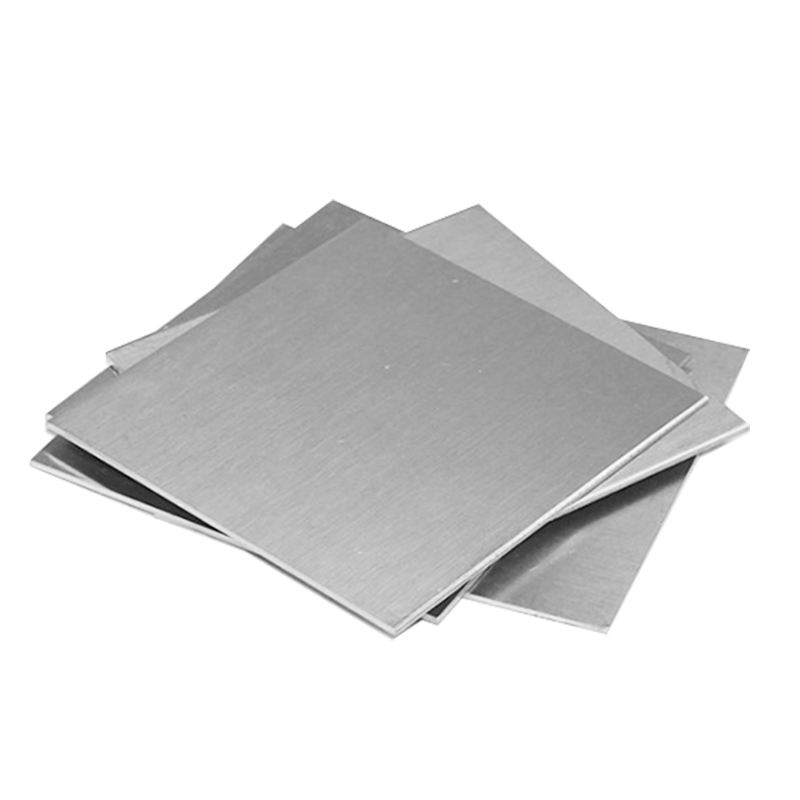


The base material of stainless steel composite plate can use various ordinary carbon steel and special steel such as Q235B, Q345R, 20R. The coating material can be used 304, 316L, 1Cr13 and duplex stainless steel and other grades of stainless steel. Material and thickness can be freely combined to meet the needs of different users. Stainless steel composite plate not only has the corrosion resistance of stainless steel, but also has the good mechanical strength and processing properties of carbon steel, is a new type of industrial products. Stainless steel composite plate has been widely used in petroleum, chemical industry, salt industry, water conservancy and electric power, and other industries. As a resource-saving product, stainless steel composite plate reduces the consumption of precious metals and greatly reduces the project cost. To achieve the perfect combination of low cost and high performance, there are good social benefits.
Production method
How are stainless steel composite panels produced? There are two main methods for the industrial production of stainless steel composite panels, explosion cladding and hot rolling cladding.
The production process of explosive composite panels is to overlap stainless steel plates on carbon steel substrates, with a certain distance separated by mats between the stainless steel plates and carbon steel substrates. Explosives are laid flat on the stainless steel plate. The energy of the explosive explosion causes the stainless steel plate to hit the carbon steel substrate at high speed, generating high temperature and high pressure, so that the interface between the two materials can be solid-phase welded. Under ideal conditions, the shear strength per square millimeter of the interface can reach 400 MPa.
The hot-rolled composite plate process is made by rolling the carbon steel substrate and stainless steel plate in a physically pure state under high vacuum conditions. During the rolling process the two metals diffuse to achieve a complete metallurgical bond. Of course, in order to improve the wetting effect of the composite interface and improve the bonding strength, a series of technical measures must be taken in terms of physical and chemical treatment of the interface. The above two composite panel manufacturing methods both comply with the GB/T8165-2008 national standard. This standard is not equivalent to the Japanese JISG3601-1990 standard, and its main technical indicators are the same or higher than the Japanese standard.
Process characteristics
Characteristics of explosive composite technology
1. Since explosive composite is cold processing, it can produce many kinds of metal composite panels besides stainless steel composite panels, such as titanium, copper, aluminum, etc.
2. Explosive compounding can produce stainless steel composite plates with a total thickness of several hundred millimeters, such as some large bases and tube sheets. However, it is not suitable for producing thin composite steel plates with a total thickness less than 10 mm.
3. Explosion composite uses the energy of explosives to produce, which will cause vibration, noise and smoke pollution to the environment. However, the equipment investment is small, and there are hundreds of domestic explosion production plants. Due to limitations of weather and other process conditions, the production efficiency of explosive composites is low.
Characteristics of hot rolling composite process
1. It is produced using large medium plate rolling mills and hot continuous rolling mills, so the production efficiency is high and the delivery speed is fast. The product format is large and the thickness can be freely combined. Stainless steel coating thickness above 0.5mm can be produced. However, the investment is large, so there are few manufacturers.
2. Due to the limitation of the compression ratio of rolled steel, hot rolling production cannot yet produce composite steel plates with a thickness of more than 50mm, and it is also inconvenient to produce various small batch, round and other special-shaped composite plates. Advantages of hot-rolled composite panels: 6, 8, and 10 mm thin gauge composite panels. Under hot continuous rolling conditions, composite coil plates can be produced, reducing production costs and meeting more user needs.
3. Under the current technical conditions, the hot rolling process cannot directly produce titanium, copper, aluminum and other non-ferrous metal composite panels.
Cold rolled stainless steel composite plate
On the basis of hot-rolled stainless steel composite plates, through annealing, pickling, cold rolling, intermediate annealing, pickling (or bright annealing), straightening and finishing and other production processes, stainless steel composite coils (plates) suitable for the civil field have been produced. The surface of the plate reaches the surface quality of stainless steel of the same series, and the yield strength is better than that of stainless steel of the same brand. The thinnest is 0.6mm.
Stainless steel composite panels have the characteristics of various carbon steels and stainless steel. They are welcomed by users for their excellent performance-price ratio and have broad market prospects. But what’s interesting is that after more than half a century of ups and downs in the development process starting in the 1950s, many people still don’t know about it. Many more people haven’t used it. It should be said that the market for stainless steel composite panels is gradually entering a mature stage, but there is still a lot of development work to be done. The exploration and efforts of scientific and technological workers to build a resource-saving society will never stop.
Market area
Nowadays, coal coking, coal gasification, synthetic ammonia, and chemical fertilizers have become the dominant coal chemical industries in my country and have achieved sustained and rapid development. There is a contradiction between the growth of our domestic oil consumption and the supply and demand of oil. The introduction and development of coal chemical industry technologies such as methanol to olefins and coal to liquefaction have accelerated industrialization construction, and companies engaged in the production of coking products have also sprung up like mushrooms after a rain. Such as Sunning Steel Co., Ltd. and so on.
For the coal coking industry, because pipelines, equipment, etc. are exposed to high temperatures and corrosive environments for a long time, equipment corrosion is serious and the service life of the equipment will be greatly reduced. Therefore, improving the corrosion resistance of equipment, extending the service life of equipment, and reducing enterprise production costs are important means to improve the competitiveness of enterprises.
Stainless steel composite plate is a metal composite material with an outer layer of pure stainless steel and an inner layer of carbon steel. This metal composite material of pure stainless steel and carbon steel is a stainless steel composite plate. The emergence of stainless steel composite plates has become a major factor in the development of coking equipment. Manufacturing, upgrading and transformation provide material guarantee.
1. Using stainless steel composite plates to replace the original pure stainless steel plates can reduce equipment costs without affecting the use of the equipment. Stainless steel composite plates can be used in desulfurization towers, ammonia evaporation towers, benzene removal towers, etc., with low cost and corrosion resistance. Taking the benzene removal tower as an example, stainless steel composite plates are used instead of pure stainless steel plates, and the cost can be reduced by more than 30%.
2. Stainless steel composite panels retain the corrosion resistance, wear resistance, antimagnetic properties and beautiful appearance of pure stainless steel, while also possessing the good weldability, formability, stretchability and thermal conductivity of carbon steel. It can be widely used in coking equipment to improve the corrosion resistance of coking equipment and extend the service life of the equipment.
3. Stainless steel composite plates have good thermal conductivity and anti-corrosion function, and can be widely used in coking equipment. If used in an ammonia evaporation tower, it can extend the service life of the ammonia evaporation tower and reduce operating costs; on the other hand, it can also be used in ammonia evaporation equipment due to its anti-corrosion properties.