
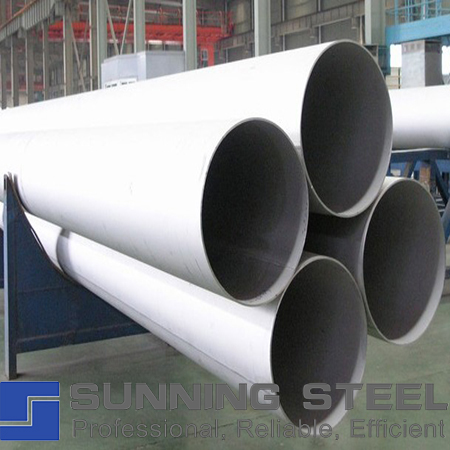


Product Specification and Size :
1):Standard: ASTM A312, ASTM A269, ASTM A213 etc.
2):Outer Diameter: 8mm-219mm
3):Wall thickness: 0.25mm-140mm
4):Grade: TP304, TP304L, TP316L, TP321, 904L etc.
5):Dimension according to ANSI B36.10 & B36.19
DESCRIPTION OF STAINLESS STEEL HOLLOW BARS
Using hollow rods instead of solid rods can help you directly save material and mold costs, reduce processing time and increase productivity.
By starting with a near-net-shaped hollow rod, less metal is lost due to low-value chips and apparently reduced tool consumption. Therefore, when using this more complex product form, investment costs can be saved immediately.
Chemical Composition of Stainless Steel Hollow bars
| Chemical Composition | |||||||
| Grade | C | Si | Mn | P | S | Ni | Cr |
| 201 | 0.15 | 1.00 | 5.50-7.50 | 0.06 | 0.03 | 3.50-5.50 | 16.00-18.00 |
| 202 | 0.15 | 1.00 | 7.50-10.00 | 0.06 | 0.03 | 4.00-6.00 | 17.00-19.00 |
| 304 | 0.08 | 1.00 | 2.00 | 0.045 | 0.03 | 8.00-11.00 | 18.00-20.00 |
| 304L | 0.03 | 1.00 | 2.00 | 0.045 | 0.03 | 8.00-12.00 | 18.00-20.00 |
| 309 | 0.20 | 1.00 | 2.00 | 0.045 | 0.03 | 12.00-15.00 | 22.00-24.00 |
| 309S | 0.08 | 1.00 | 2.00 | 0.045 | 0.03 | 12.00-15.00 | 22.00-24.00 |
| 310 | 0.25 | 1.50 | 2.00 | 0.045 | 0.03 | 19.00-22.00 | 24.00-26.00 |
| 310S | 0.08 | 1.50 | 2.00 | 0.035 | 0.03 | 19.00-22.00 | 24.00-26.00 |
| 316 | 0.08 | 1.00 | 2.00 | 0.045 | 0.03 | 10.00-14.00 | 16.00-18.00 |
| 316L | 0.03 | 1.00 | 2.00 | 0.045 | 0.03 | 10.00-14.00 | 16.00-18.00 |
| 316Ti | 0.08 | 1.00 | 2.00 | 0.045 | 0.03 | 10.00-14.00 | 16.00-18.00 |
| 410 | 0.15 | 1.00 | 1.00 | 0.04 | 0.03 | 0.60 | 11.50-13.50 |
| 430 | 0.12 | 0.75 | 1.00 | 0.04 | 0.03 | 0.60 | 16.00-18.00 |
More importantly, reducing processing time or eliminating processing steps altogether can greatly increase productivity. This can be seen as reducing the processing time or cost of a given part, or it can be seen as higher productivity when the machine is fully loaded.
Finally, when hollow rods are used in place of solid rods, it is not necessary to make holes when producing parts with a central hole, which causes the material to harden and is not conducive to subsequent machining.